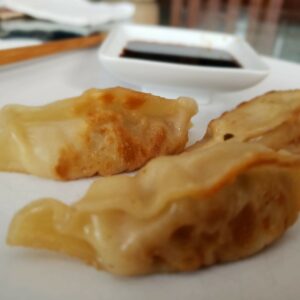
Pork Dumplings
Getting Chinese takeout always includes dumplings for me, so why not have them homemade for a change.
Utensilios/Equipment/Ustentsiles
- Chopping board
- Chef's Knife
- Medium bowl
- Silicone spatula
- Small skillet
- Pastry brush
- Baking dish or sheet tray
- Kitchen towel (clean and dry) - to cover dumplings assembled
- Bamboo basket or steamer (for steamed dumplings)
- Medium Skillet with lid (for fried dumplings)
- Turner or Kitchen tongs
Ingredientes/Ingredients/Ingrédients
- 12 dumpling wrappers
- 200 g pork ground
- 10 g ginger minced
- 100 g green cabbage minced
- 50 g chives minced
- 1 carrot finely diced
- 1 clove garlic minced
- 1 egg white
- 60 ml soy sauce
- Dash Sherry amontillado
- Salt and pepper to season

Preparación/To Prepare/Préparation
- Mix all ingredients in a bowl and incorporate.
- Take one teaspoon of the forcemeat and sauté. Verify seasoning should you consider it necessary. This is just to be able to taste, so don't sauté all of the forcemeat; just that little bite.
- Assemble the dumplings with the raw forcemeat. In order to accomplish, take one of the wrappers and place it on your working surface. To the center, add a teaspoon stuffing at the most, since you don't want them to explode when they get cooked. With a pastry brush or just using your finger, smear a little water on the edge of the wrapper using it as a kind of glue. I do it with the tip of my finger. I feel it's much easier. Close the turnovers by creasing the edge. A second option is to simply press down and curl it like a flounce.
- As you assemble your dumplings, be sure to put them in a baking sheet or a dish and cover them. You don't want them to dry out; it will crack the dough. As soon as you have all of your dumplings you can cook them either in the steaming basket or by frying them in a skillet with a lid.
- If you choose the steaming option, line the bamboo basket with a couple cabbage leaves, place them with the seam facing upwards, and cook them for approximately 8 minutes.
- If you'd rather fry them, I use a skillet with peanut oil. Heat it up and fry the first side to golden brown, turn them around and color the second side. When both sides look more or less the same, add 2 to 3 tablespoons fresh water to your frying pan and cover immediately. Let the water evaporate and turn the fire off.
- The dumplings are ready to be served. On the side, you can serve a dipping sauce of your preference with a soy sauce base with rice vinegar or mirin. At home we only put soy sauce with a bit of lime juice and sometimes a little minced chili like serrano or árbol.